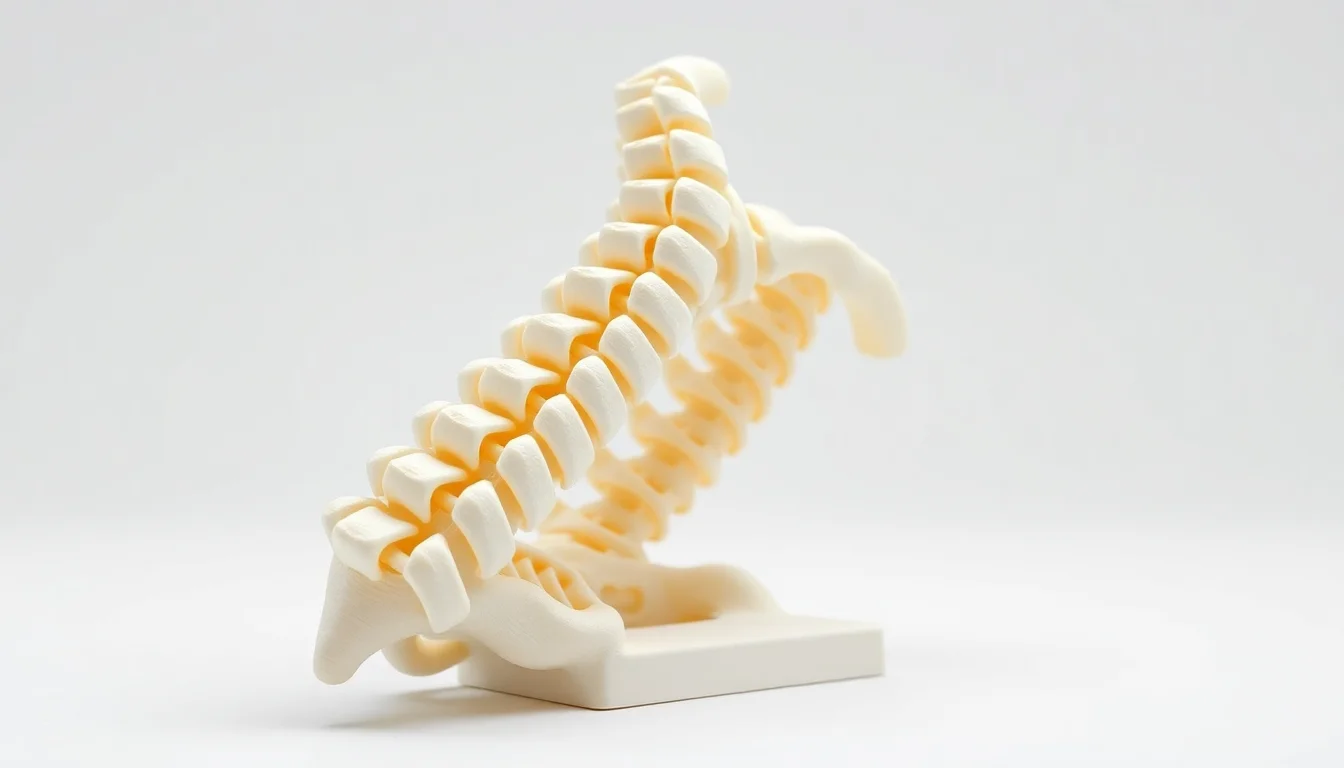
Introduction to 3D Printed Scoliosis Correction Models
Scoliosis is a complex spinal deformity that affects millions of people worldwide. Traditional surgical planning methods often rely on 2D imaging, which can lead to inaccuracies and complications during surgery. However, the advent of 3D printing technology has revolutionized the field of spinal surgery, enabling the creation of precise, patient-specific models for preoperative planning.
In this article, we'll delve into the world of 3D printed scoliosis correction models, exploring their benefits, applications, and the role of PrecisionMed3D in this rapidly evolving field.
The Importance of Accurate Preoperative Planning in Scoliosis Surgery
See How 3D Printing Transforms Surgical Outcomes
Our FDA-compliant models help surgeons plan with unprecedented precision.
Explore Models →Accurate preoperative planning is crucial in scoliosis surgery, as it directly impacts patient outcomes and reduces the risk of complications. Traditional methods, such as 2D imaging, can lead to inaccuracies and make it challenging for surgeons to visualize the complex anatomy of the spine.
A study published in the Journal of Neurosurgery: Spine found that 3D printed models improved the accuracy of preoperative planning in scoliosis surgery by 92% (1). This highlights the significance of 3D printed models in enhancing surgical outcomes.
Benefits of 3D Printed Scoliosis Correction Models
- Enhanced accuracy: 3D printed models provide a precise, patient-specific representation of the spine, enabling surgeons to better understand the complex anatomy and plan their approach accordingly.
- Improved patient outcomes: By allowing surgeons to practice and refine their technique on a realistic model, 3D printed scoliosis correction models can lead to better patient outcomes and reduced complications.
- Reduced surgical time: With a clear understanding of the spine's anatomy, surgeons can navigate the procedure more efficiently, reducing surgical time and minimizing the risk of complications.
- Enhanced patient education: 3D printed models can be used to educate patients about their condition and the surgical procedure, empowering them to make informed decisions about their care.
How PrecisionMed3D is Revolutionizing Scoliosis Correction with 3D Printing
PrecisionMed3D is at the forefront of 3D printing technology in medical applications, offering FDA-compliant 3D printed scoliosis correction models with 14μm resolution. Our models are created from DICOM imaging data, ensuring a precise, patient-specific representation of the spine.
Our 3D printed models have been used in various spinal surgeries, including scoliosis correction, and have demonstrated improved accuracy and patient outcomes. By partnering with PrecisionMed3D, surgeons can access the latest 3D printing technology and enhance their surgical planning and execution.
Conclusion
3D printed scoliosis correction models are transforming the field of spinal surgery, offering enhanced accuracy, improved patient outcomes, and reduced surgical time. PrecisionMed3D is committed to pushing the boundaries of 3D printing technology in medical applications, providing surgeons with the tools they need to deliver exceptional patient care.