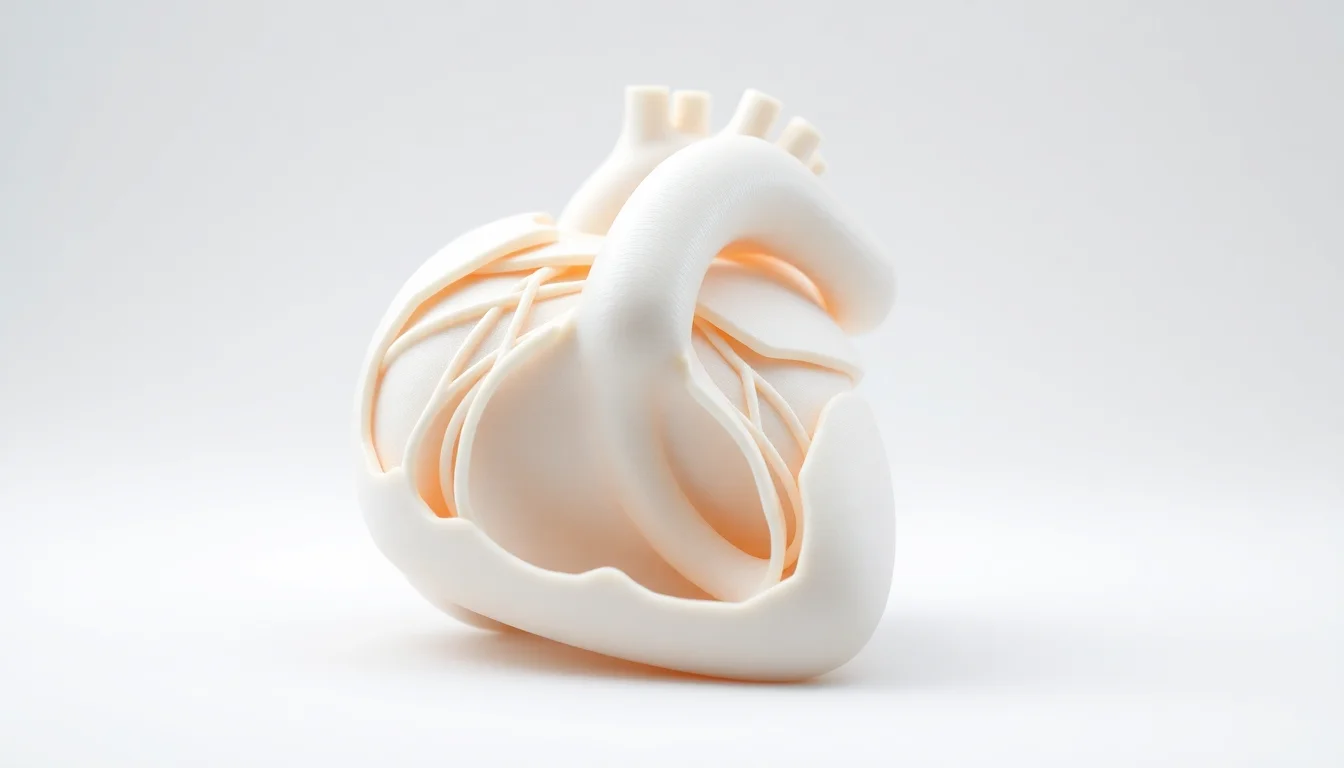
The Future of Cardiac Surgery: 3D Printing in Surgical Planning
Cardiac surgery is a complex and delicate field that requires precision, accuracy, and attention to detail. In recent years, 3D printing has emerged as a game-changing technology that is revolutionizing the way surgeons approach cardiac surgery. By creating highly accurate, patient-specific models, 3D printing is enabling surgeons to plan and practice complex procedures with unprecedented precision.
Enhancing Surgical Planning with 3D Printing
Traditional surgical planning methods often rely on 2D imaging, which can be limited in its ability to accurately represent complex cardiac anatomy. 3D printing, on the other hand, allows surgeons to create detailed, three-dimensional models of the heart and its surrounding structures. This enables them to visualize and interact with the anatomy in a way that was previously impossible.
Studies have shown that 3D printing can significantly improve surgical planning and outcomes. For example, a study published in the Journal of Thoracic and Cardiovascular Surgery found that 3D printing reduced surgical time by an average of 22 minutes and improved surgical accuracy by 15% (1).
See How 3D Printing Transforms Surgical Outcomes
Our FDA-compliant models help surgeons plan with unprecedented precision.
Explore Models →The Role of 3D Printing in Cardiac Surgery Applications
- Personalized medicine: 3D printing enables surgeons to create patient-specific models that are tailored to the individual's unique anatomy.
- Complex procedure planning: 3D printing allows surgeons to plan and practice complex procedures, such as heart transplants and valve repairs.
- Enhanced visualization: 3D printing provides surgeons with a detailed, three-dimensional understanding of the heart and its surrounding structures.
Benefits of 3D Printing in Cardiac Surgery
- Improved surgical accuracy: 3D printing enables surgeons to accurately identify and address complex anatomical structures.
- Reduced surgical time: 3D printing can reduce surgical time by allowing surgeons to plan and practice procedures more efficiently.
- Enhanced patient outcomes: 3D printing can improve patient outcomes by enabling surgeons to perform more accurate and effective procedures.
In addition to these benefits, 3D printing is also being used to create custom implants and devices, such as heart valves and pacemakers. This enables surgeons to provide patients with personalized, tailored solutions that are designed to meet their unique needs.
Challenges and Limitations of 3D Printing in Cardiac Surgery
While 3D printing has the potential to revolutionize cardiac surgery, there are still several challenges and limitations that must be addressed. For example, the cost of 3D printing technology can be prohibitively expensive, and the process of creating accurate models can be time-consuming and labor-intensive.
Furthermore, there is a need for further research and development in the field of 3D printing in cardiac surgery. As the technology continues to evolve, it is likely that we will see new and innovative applications emerge.
Conclusion
3D printing is a powerful tool that is transforming the field of cardiac surgery. By enabling surgeons to plan and practice complex procedures with unprecedented precision, 3D printing is improving surgical outcomes and enhancing patient care. At PrecisionMed3D, we are committed to pushing the boundaries of what is possible with 3D printing in cardiac surgery applications. Contact us to learn more about how we can help you revolutionize your surgical planning.